I got a first generation iPad A1337. When I connected the charger, the screen only blinked dimly.
I opened it with a flat screwdriver and measured the battery with a multimeter. It was at 0 V, which is never good news for a battery.
After checking the price of a replacement, I decided that the old iPad was not worth buying a new battery for. Instead, I tried powering it from a 5 V, 2 A USB charger that I already had.
I carefully cut around the battery along the green line shown in the photo, then desoldered the two dead battery cells from the original battery board.
After checking the polarity, I soldered four wires to the two battery outputs. The striped wires are positive and the solid wires are ground. I used both battery connections to share the current load between them.
I drilled two small holes in the side of the iPad for the wires.
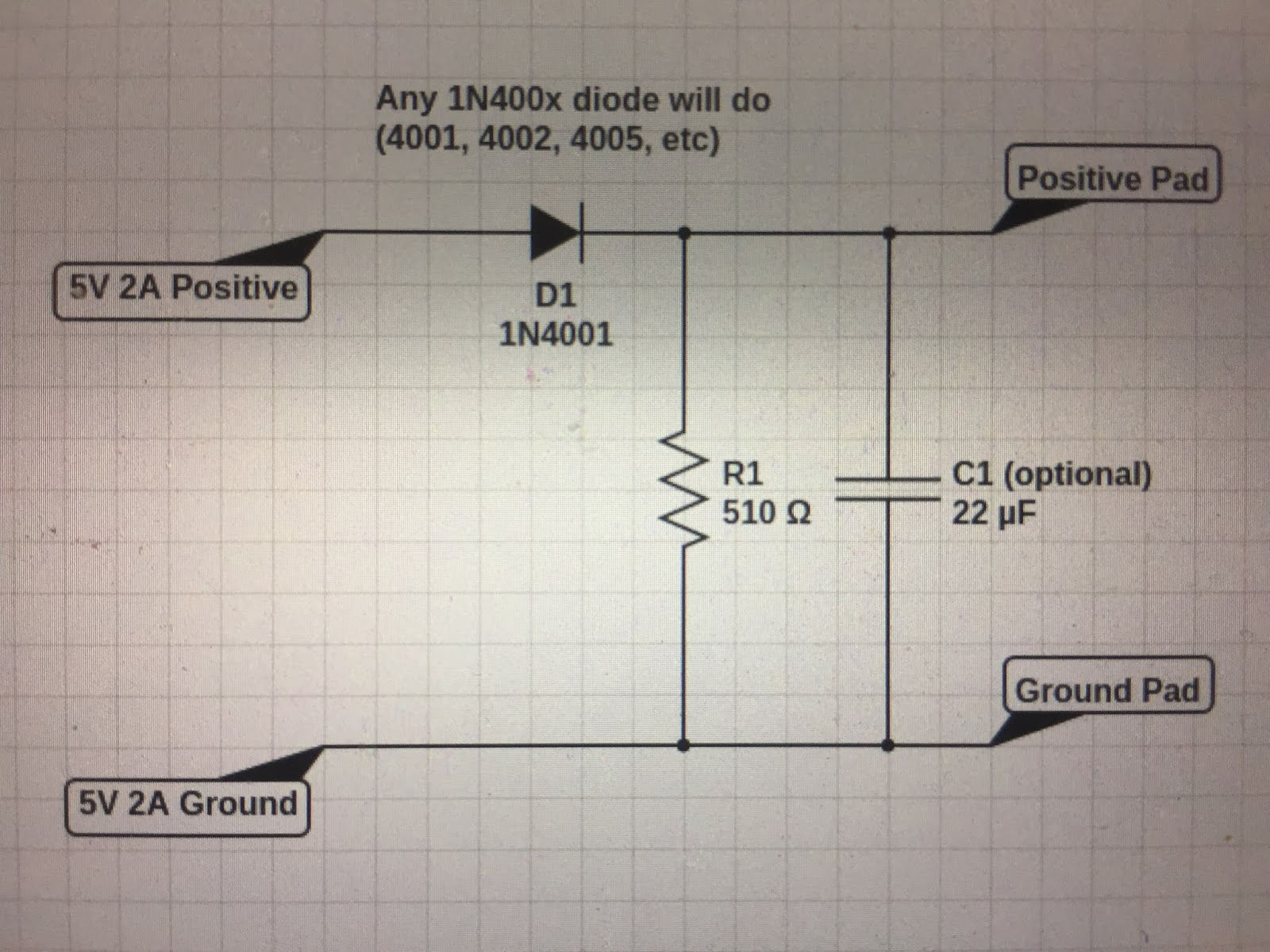
The USB supply was too high for the battery input, so I added two series diodes to the positive wires. This reduced the 5 V supply to approximately 4.3 V. I also added resistors between the positive and negative wires to provide a small load for the diodes.
The iPad still needed two quick jump starts by briefly disconnecting and reconnecting the USB charger. The first jump displayed the empty battery symbol. The second one started the iPad.
Success. I now had a useless first generation iPad running from a USB charger.
The original battery manager compares the two battery sections and takes more current from the one with the higher voltage. That is why I kept both original battery connections instead of powering only one side.
The same arrangement could also be powered from suitable lithium ion cells instead of an AC adapter.
Modification photos below.
Photos and videos




Thanks a lot for sharing!
ReplyDeleteGreat to find this. A few questions: what rating is needed for the resistor (watts?) and the diode (does it need to be 1A?)? Also, why do you have 4 wires coming for the USB charger (5v source)? Couldn't you just use 2 wires from the source and then solder a short "jumper" wire from one positive terminal on the iPad to the other positive terminal (and same for negative terminals)? Last question, there are similar blogs that show the use of 6 2200 uF capacitors. Do you know what that accomplishes vs your use of one 22 uF capacitor? Thanks for any additional info. -Mark
ReplyDelete